

FormInput generates a validated form from a Pydantic model. The user fills it out, and the submission is validated against the model before being returned. Structured elicitation that can’t be hallucinated.
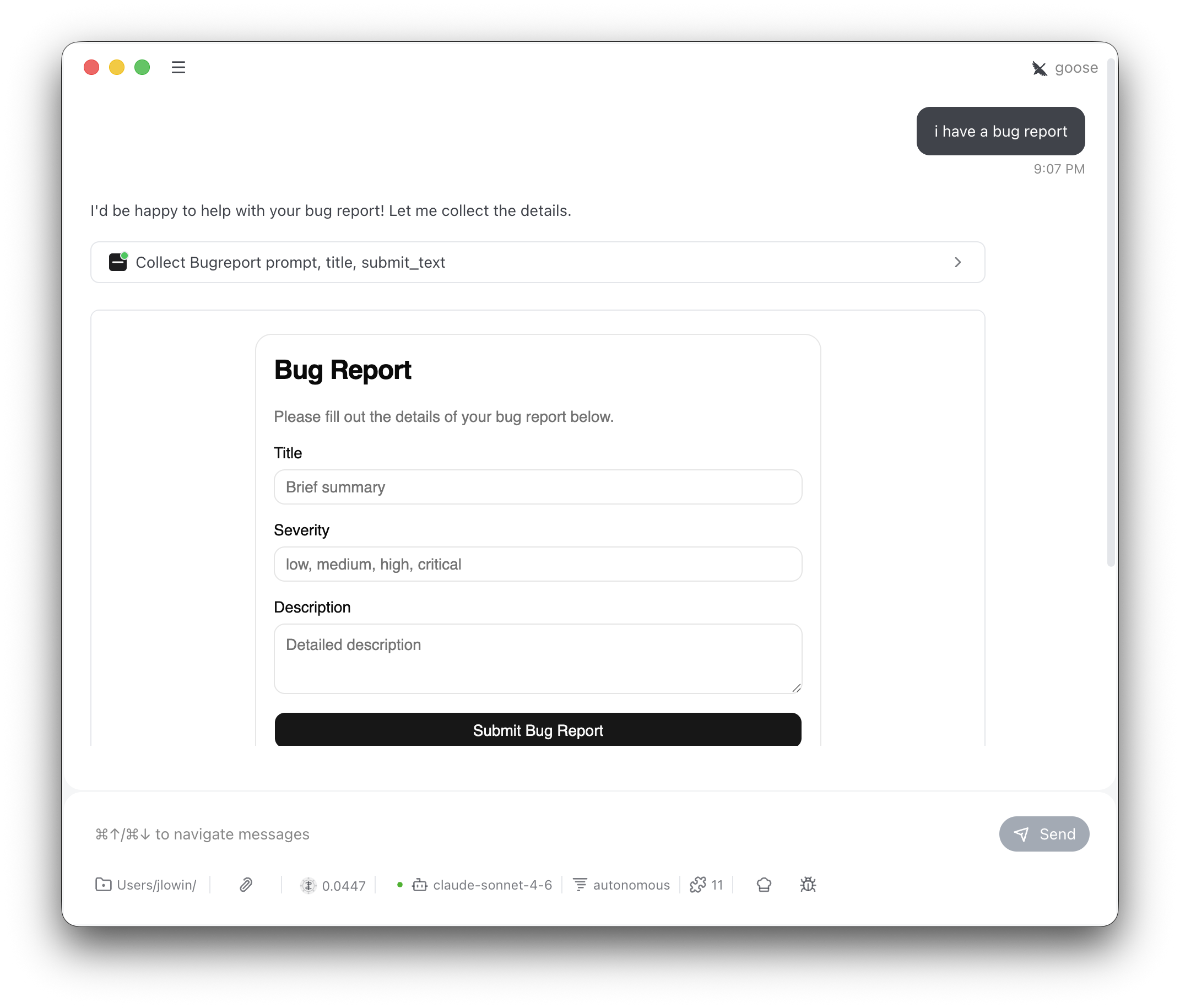
The tool name is derived from the model class name, lowercased:
collect_{modelname}. So BugReport becomes collect_bugreport, ShippingAddress becomes collect_shippingaddress. Use tool_name to override if needed. The LLM calls it with a prompt explaining what it needs, and the user gets a form with fields matching the model.
Field mapping
FormInput uses Prefab’s Form.from_model(), which maps Pydantic types to form components:
Use
Field() metadata to control labels (title), placeholders (description), and validation (min_length, max_length, ge, le). Use json_schema_extra={"ui": {"type": "textarea"}} for multiline text.
Callback
By default, the validated model is returned as JSON. Provide anon_submit callback to process the data server-side:
Configuration
send_message=True to push the result back into the conversation via SendMessage, triggering the LLM’s next turn. Without it, the result is just the tool return value.